28-29 SEPTEMBER 2005
Did Marcos Wealth and Taxpayers Bankroll GMA's Campaign?
by LUZ RIMBAN
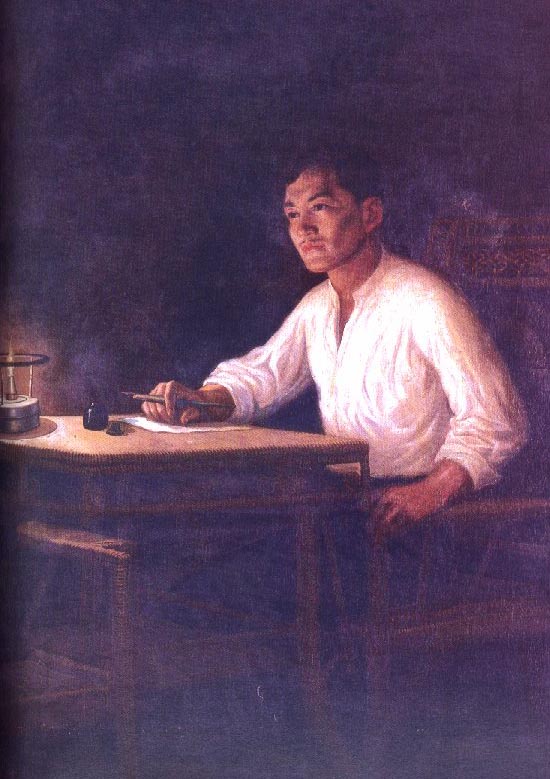
Over P1 billion of fund releases from the Department of Agriculture came from the portion of the Marcos wealth recovered by the government to fund the agrarian reform program. Farmers' groups allege that the money was diverted to Arroyo's campaign. [Photo courtesy of Lopez Museum]
WHILE CONGRESS is busy looking into allegations that jueteng lord Bong Pineda contributed P300 million to the Arroyo campaign, far less attention has so far been devoted to charges that the President's biggest donor was actually the Filipino taxpayer.
As much as P5 billion from government coffers could have been used to promote Arroyo's candidacy, PCIJ research shows. The Department of Agriculture (DA) was the biggest source of the funds — about P3 billion worth of DA funds was released mainly to pro-Arroyo local officials and congressmen from February to May 2004.
Another P2 billion came from the Overseas Workers' Welfare Administration (OWWA) Fund and the Motor Vehicle Users' Charge and was used to pay for Arroyo billboards as well as government patronage programs during the elections like temporary health insurance and temporary employment programs.
The DA fund releases included over P1 billion that came from the portion of the Marcos wealth that had been confiscated by the government. The law says that money recovered from the Marcoses should go to land reform. In April 2004, part of these funds were transferred from the Department of Land Reform to the Department of Agriculture.
Up to now, the DA cannot account for these funds, which were supposed to be used to buy seeds and to finance community irrigation projects. Farmers' groups allege the money was instead diverted to the presidential campaign. "Stolen money has been stolen again," says Manuel Quiambao, president of the farmers' group Peace Foundation.
It took years to lay the groundwork for mobilizing government resources for the president's election. It entailed, first of all, the appointment of allies to government agencies with pots of funds that could be tapped for the campaign. It also entailed the identification of those funds and their release at the right time. Such strategic planning, in the words of Senator Sergio Osmeña III, "was so systematic, it's mind boggling."
But Arroyo wasn't the first to have done this. Most incumbents who ran for reelection made Filipino taxpayers foot their campaign expenses. In 1969, in what was touted as the costliest and dirtiest of Philippine elections till then, the incumbent Ferdinand Marcos spared no expense to get himself reelected. Massive election spending that year triggered a balance of payments crisis and a currency devaluation.
The temptation to use taxpayers' money for an incumbent's reelection campaign is one reason the 1987 Constitution banned sitting presidents from seeking another term.
An incumbent, after all, has power over the government's vast organization and resources, including the funds in the national treasury intended for government services. He or she has a built-in advantage no other candidate can equal.
Most of the fund releases that were allegedly diverted to the Arroyo campaign began in early February, just before the start of the 90-day campaign for the presidency, and continued till April. But huge chunks of money were already released to local officials even in late 2003. The amounts involved are huge, and they included the following:
On February 2, 2004, Labor Secretary Patricia Sto. Tomas, in her capacity as chairperson of the Overseas Workers' Welfare Administration (OWWA), along with then OWWA Administrator Virgilio Angelo signed a resolution transferring P530 milllion from the OWWA medicare fund to the Philippine Health Insurance Corporation.
The money enabled the President to give away Philhealth cards valid for a year to people in the places she visited. What angers migrant groups is at that same time, OWWA was turning down the health claims of hundreds of overseas workers, ostensibly because the OWWA medical program was put on hold.
According to the Migrante party-list group, 461 overseas workers who either had medical reimbursements pending or checks for pick up at OWWA were told the agency was not going to process the claims. The group says OWWA stopped all medical reimbursements in a meeting on January 16, 2004.
As early as November 2002, Francisco Duque III, then Philhealth president had proposed that his agency take over OWWA's medicare functions. Duque, now health secretary, is known to be a close Arroyo ally and is a long-time friend of the First Family and their neighbor at La Vista in Quezon City. Duque's father also served in the Cabinet of former President Diosdado Macapagal.
In his memorandum to the President, Duque said "the proposed transfer will have a significant bearing on the 2004 elections." Three months later in February 2003, Arroyo signed the proposed executive order.
On February 3, 2004, Budget Secretary Emilia Boncodin signed a Special Allotment Release Order or SARO addressed to the Office of the Secretary of the Department of Agriculture for P728 million. The amount was "to cover the purchase of farm inputs," and was classified as an additional program. The amount was distributed to mayors, governors, and congressmen. Over P100 million also found its way to obscure or nonexistent foundations that were apparently used as conduits for transferring the money for use in the campaign.
On February 11, 2004, Boncodin signed another SARO for the DA, making available P1.1 billion "to cover the GMA Rice and Corn and Livestock Program." Again, the amount was disbursed to mayors, governors, and congressmen.
As early as November 2003, Arroyo and then Public Works Secretary Road Florante Soriquez began what is known as the "Kalsada Natin, Alagaan Natin," with funds drawn from the Motor Vehicle Users' Charge (MVUC) or the road users' tax.
This tax is imposed on vehicle owners by Republic Act 8794. The law specifies that the money can be used only for three purposes: road improvement and drainage repairs, traffic lights and safety devices, and anti-air pollution programs. Vehicle owners pay the fee each time they register with the Land Transportation Office (LTO).
At the height of the presidential campaign, former LTO chairman Mariano Santiago filed a case before the Commission on Elections seeking President Arroyo's disqualification. He argued that she used P1.4 billion drawn from the MVUC to promote her candidacy. The money was used to pay for billboards that displayed the president's face and name, while street sweepers hired by the project wore uniforms bearing her name.
On January 14, 2004, Secretary of the Cabinet Ricardo Saludo issued a memo instructing Cabinet secretaries to "change the word PGMA to 'President Gloria' in all billboards and notices of the president's program's and projects." Apparently, many people did not know what PGMA stood for. Saludo warned, "the PNP shall monitor and validate the change within the next two weeks."
On March 23, 2004, the Department of Budget and Management released to the National Irrigation Authority P541 million from the Marcos wealth supposedly for activities in connection with the Comprehensive Agrarian Reform Program. That fund, which was allegedly used for the campaign, has yet to be accounted for.
On April 28, 2004, the DBM also informed the DAR of the release of P544 million "to cover funding requirements for the Ginintuang Masaganang Ani (GMA) Rice Program." This amount, too, came from the Marcos wealth. This fund was more than what was actually needed for the purpose. The program has yet to be completed, and farmers' groups suspect that a large portion of the funds was diverted for election purposes.
It is hard to make an exact accounting of other government funds used to finance Arroyo's campaign. For one, it is difficult to tell which expenditures were incurred in the natural course of her work as president and which went to promoting her candidacy.
For instance, Cabinet secretaries were actively involved in the Arroyo campaign. Former Social Welfare and Development Secretary Corazon 'Dinky' Soliman herself admits the town hall meetings dubbed "Pulong Bayan" that Arroyo conducted during the campaign were organized by the DSWD from funds provided by the Office of the President.
Those town hall meetings would have been part of the normal discharge of the president's functions, except they also became automatic public relations events that upped Arroyo's visibility.
In April 2004, President Arroyo also signed Executive Order 307 launching her post-secondary scholarship program for poor but deserving students. The program was called "Iskolar ng Mahirap na Pamilya (Poor Family's Scholar)" that was to be implemented by the Commission on Higher Education (CHED) and the Technical Education Skills Development Authority (TESDA).
Under the presidential order, both CHED and TESDA were authorized to issue "certificates/vouchers" entitling poor families to one scholarship worth P10,000. No specific funds were identified for the purpose, although the President said the money was to come from "any available source under the CY 2004 General Appropriations Act or from any applicable funding source to cover the initial funding requirement of the program."
In the scheme of things, however, the DSWD, CHED and TESDA may not have been that vital to the campaign. For fund-raising purposes, the agencies that mattered were those awash with cash and could serve as channels of patronage from Malacañang to local officials who could be called upon to marshal the votes for the president.
In fact, early in the Arroyo presidency, some government officials were already saying that Gloria and Mike Arroyo were strategically placing their most trusted lieutenants in the most cash-rich and well-positioned government agencies in preparation for a 2004 campaign.
More than all other agencies, those in the agriculture sector made the most disbursements during the 2004 election campaign. Apart from the DA, a major source of funds was the Department of Land Reform (DLR), the lead agency implementing the Comprehensive Agrarian Reform Program (CARP), which is funded by the Marcos wealth.
On January 30, 2004, the Philippine National Bank remitted to the National Treasury $624 million, equivalent to P35 billion, representing the biggest amount recovered so far from the fabled Marcos billions. Just days earlier, the Supreme Court had declared with finality that the amount belonged to the government, denying an appeal from the Marcos family. Under the law, this money is to be used only for CARP, specifically for land acquisition and other activities to help land reform beneficiaries. Part of it eventually went to the DA.
A hearing conducted by the House Oversight Committee earlier this year found that as of October 2004, nearly P9 billion of the Marcos money had already been spent. The bulk of this went to buying land from landowners, while the rest went to program beneficiaries, and expenses under the nebulous DAR-Fund 101.
Farmers' groups, however, say there were two questionable disbursements made from the Marcos wealth.
On March 8, 2004, then DAR officer-in-charge Jose Mari Ponce signed a Memorandum of Agreement with Agriculture Secretary Lorenzo allowing the DA to use P544 million from the Marcos wealth supposedly for "seed assistance" to agrarian reform beneficiaries, again under the Ginintuang Masaganang Ani (GMA) Hybrid Rice Commercialization Component. On April 28, the amount was released by the DBM.
On March 18, the Presidential Agrarian Reform Council (PARC) asked the DBM to again draw from the Marcos wealth, again for the DA. The amount was P541 million and the ultimate beneficiary was supposed to be the DA agency, the National Irrigation Administration (NIA).
"The amount shall finance various ongoing and new CARP irrigation projects," said the Presidential Agrarian Reform Council. Although Ponce's name appears as signatory, being DAR officer-in-charge and PARC vice chairman, the letter did not bear his signature. It had only that of Jeffrey Galang, a PARC secretariat member Ponce supposedly authorized to seek the release of P500 million in CARP funds.
Farmers' groups say strange things seem to be happening with the Marcos wealth and they even fear the money might already have disappeared. But they suspect that both amounts, totaling over P1 billion, were spent for the campaign.
The P544 million was meant for buying seeds for 600,000 hectares of land for 2004. Yet when the money arrived, the target coverage was slashed to 300,000 hectares. As of March 2005, says Manuel Quiambao of the farmers' group Peace Foundation, only 162,000 hectares had received the GMA seeds.
Moreover, instead of purchasing the seeds directly and then distributing them to farmers, DA regional units suspiciously released the money to local officials. This violates the spirit of the agreement signed by the DLR and the DA, which states that the money should be used to purchase seeds to be given directly to land reform beneficiaries.
Quiambao also complains that up to now the NIA has not released the list of farmers who benefited from the P541-million fund intended for small, communal irrigation projects. "According to our investigation, the DA used these funds for the elections," he says. "That's why we're reviving the 'Bantay Marcos Wealth.'"
This year, the farmers' group Ugnayan ng mga Nagsasariling Organisasyon sa Kanayunan or UNORKA represented by its secretary-general Enrico Cabanit, filed a malversation case against former NIA Administrator Jesus Emmanuel Paras.
UNORKA said "these funds were released to the National Irrigation Administration on the representation by the respondent (Paras) that these would be used only for activities related to the Program Beneficiaries Development Component of the CARP and only in the areas listed."
Yet, the group said, Paras "whimsically and capriciously" distributed the funds to areas that were not included in the original list of beneficiaries, or areas that did not need it.
"To date, no complete liquidation nor comprehensive performance or financial audit, terminal or otherwise, could be submitted by respondent on the program or funds released and received, indicating that these funds were malversed," UNORKA said. — with additional reporting by Alecks Pabico and Yvonne T. Chua
Sunday, February 17, 2008
Did Marcos Wealth and Taxpayers Bankroll GMA's Campaign?
Posted by Alex Rizada at 12:13 AM 0 comments
Labels: Agri Scam
Billions of Farm Funds Used For Arroyo's Campaign
28-29 SEPTEMBER 2005
Billions of Farm Funds Used For Arroyo's Campaign
by LUZ RIMBAN
--------------------------------------------------------------------------------
The PCIJ’s latest report follows the trail of nearly P3 billion released by the Department of Agriculture (DA) during the 2004 presidential campaign. Our investigation found that big chunks of that money were diverted to congressmen, mayors and governors who are allies of President Arroyo. We also found that a portion of the money mysteriously ended up in the hands of obscure private foundations and companies. At least one of these foundations doesn’t exist, according to records of the Securities and Exchange Commission (SEC). From the foundations, the money was siphoned to the Arroyo campaign, say DA insiders, Commission on Audit investigators and farmers’ groups.
While Congress has been busy looking into allegations that jueteng lord Bong Pineda contributed P300 million to the Arroyo campaign, far less attention has so far been devoted to charges that the President’s biggest donor was actually the Filipino taxpayer.
The Marcos wealth, we found out, was also tapped. The DA fund releases included over P1 billion that came from the portion of the Marcos money confiscated by the government. In April 2004, part of these funds were transferred from the Department of Land Reform to the DA. Up to now, the DA cannot account for these funds, which were supposed to be used to buy seeds and to bankroll community irrigation projects. Farmers groups allege the money was instead diverted to the presidential campaign.
In all, as much as P5 billion from government coffers could have been used to promote Arroyo’s candidacy, PCIJ research shows. While the bulk of this amount came from the DA, other sources included the Overseas Workers Welfare Administration (OWWA) Fund, which financed the issuance of temporary Philhealth cards. Millions of these cards bearing the President’s photo were distributed during the campaign. In addition the Motor Vehicles User’s Charge was used to pay for GMA billboards and to provide temporary jobs in an effort to win votes.
--------------------------------------------------------------------------------
Farmers' groups have long been saying what happened to the nearly P3 billion released by the Department of Agriculture (DA) during the 2004 presidential campaign: that most of the money went to pro-administration governors, mayors and congressmen who were expected to support President Gloria Macapagal-Arroyo's election. [Photo by Rick Rocamora]
THERE ARE virtually no farms in Las Piñas, Parañaque, Quezon City and certainly not in Makati. Yet these overbuilt and densely-populated cities were among at least 100 congressional districts that, according to the Department of Agriculture (DA), needed P1.8 billion in farm inputs and implements in February 2004, just when the presidential campaign was kicking off.
So when Makati Rep. Teodoro Locsin Jr. was asked last week how he used his P3-million allocation from the DA, he quickly denied ever having received it. "Where did the money go because it sure didn't go to, well, at least (Las Piñas Rep.) Cynthia Villar and me?" Locsin asked in a privilege speech last Monday.
Part of the answer, according to records obtained from the Office of the Ombudsman and the Commission on Audit (COA), confirms what government critics and farmers' groups have long been saying: that most of the money went to pro-administration governors, mayors and congressmen who were expected to support President Gloria Macapagal-Arroyo's election.
What the Ombudsman and the COA have so far discovered is that at least P120 million found its way to 15 obscure or nonexistent private foundations that had nothing to do with agriculture, but were apparently used as conduits for campaign funds. The investigators still have not traced where hundreds of millions more in DA funds ended up, but these too, they say, were likely diverted to the campaign.
COA auditors were initially baffled by the manner in which the money, disbursed beginning in February 2004, just a week before the start of the 90-day presidential campaign, up to early May, flowed from the national coffers to the DA's regional and local offices and then to the foundations.
But after months of research, the auditors, who asked not to be named, now say they have uncovered an intricate plot to use the DA's network to divert money to private groups and entities beyond government control and exempted from the rigors of state accounting procedures.
"It was a well-planned project involving national and local officials and the DA itself, with its nationwide machinery, which ensured easy distribution throughout the country," said a COA source involved in the investigation.
Questions over the use of agriculture funds are not new. Last year, several cases of plunder related to the use of DA funds were filed against President Arroyo and officials of the agriculture and budget departments.
Since last year, the Ombudsman and the COA have been discreetly following the money trail of the DA's cash-rich Ginintuang Masaganang Ani or GMA Project, a program with several components that include rice-and-corn, livestock and seeds program.
One of these components was the P728 million released on February 3, 2004, supposedly for the agricultural projects of congressional districts, towns and provinces. Another component of the GMA Project is the P1.1 billion, released on February 11, 2004 supposedly for "maintenance and operating expenses."
Both of these funds, according to former Solicitor General Fancisco Chavez, went to legislators, governors and mayors to support the president's election. Chavez said these were "in reality, an infusion into the political kitty" of Arroyo. He alleges that the president committed plunder when she used government funds for her campaign.
Crucial to the project was Jocelyn "Joc-joc" Bolante, a close friend of First Gentleman Mike Arroyo and his fellow Makati Rotarian. Bolante was named DA undersecretary for finance and administration shortly after Arroyo took over the presidency from Joseph Estrada in 2001. He was in fact the first Arroyo appointee to the department and was already put in charge even before the agriculture secretary, Leonardo Montemayor, was named.
Bolante's power over the agriculture department was widely known. Last year, just before the start of the campaign, it was he — and not then Agriculture Secretary Luis Lorenzo — who sent letters to various congressmen and local officials informing them of the availability of funds under the DA's GMA Project.
In that letter, Bolante directed these officials to coordinate with his office "to discuss all the requirements to facilitate the said project fund." Bolante's letter is dated February 3, 2004, the same day that the Special Allotment Release Order or SARO for the fund was made available by the budget department.
A copy of Bolante's letter was part of the documents submitted by Chavez to back up his plunder charge. A similar case was filed by the Kilusang Magbubukid ng Pilipinas and other farmers' groups.
Former DA Undersecretary Ibarra Poliquit admitted Bolante had a hand in determining how the GMA Project funds were spent. He said former DA chief Luis Lorenzo "authorized Bolante to decide on the realignment of funds." Although the DA has a list of officials whose "proposed projects" were to be funded by the GMA Fund, Bolante was given the authority to drop them and replace them with others.
Assistant Secretary and DA Spokesperson Jose Montes insisted "the money was put to good use" funding projects that were proposed by congressmen, governors and mayors themselves. He even cited the growth of the agricultural sector in 2004.
Montes also added that "the election had nothing to do with the timing (of the release of the funds). Ang timing namin always is kung kelan kailangan ng agrikultura yung pera, dun dapat natin ilabas. Hinahabol naming production targets, planting season ng April and May (Our timing is dictated by the needs of the agriculture sector. That's when we release funds. We have to meet production targets and the April and May planting season)."
Urban areas also need farm implements, Montes said. In the case of Parañaque, the money went to shredders for composting. And contrary to the impression that there aren't any farms or rice paddies in Parañaque, Montes said there is "urban agriculture" composed of what he called "vacant-lot farming" and the growing of ornamental plants.
Chavez said that the P728 million was disbursed to 105 congressmen, 53 governors, and 23 city and municipal mayors. He showed a list obtained from the Department of Budget and Management (DBM) attesting to the releases. He also revealed that some of these recipients received actual cash and not farm inputs, as DA rules had prescribed.
It now appears from COA findings that part of the agriculture funds went to questionable foundations. In the Metro Manila and Southern Tagalog region, COA auditors traced the funds to groups like the Gabaymasa Development Foundation, Magsasaka Foundation and Aaron Foundation.
Records of the Securities and Exchange Commission show Gabaymasa's purpose is "to undertake integrated rehabilitation and restoration activities in areas affected by natural and man-made calamities." Yet the DA issued to the foundation checks worth P23.1 million, supposedly to purchase farm inputs in Quezon, Marinduque, Oriental and Occidental Mindoro, Palawan and Paranaque.
Aaron Foundation, on the other hand, is listed in the SEC as engaging in livelihood projects and daycare centers for street children. It received P5.2 million, supposedly for agriculture projects in Batangas and Palawan.
The SEC has no record of a Magsasaka Foundation but it is listed as the recipient of P6.5 million for farm projects in Palawan.
In the Visayas and Mindanao, the agriculture funds went to various foundations, among them Ikaw at Ako Foundation (P13 million for projects in Bohol, Biliran and Agusan del Norte), Philippine Social Development Foundation (P31 million for projects in Agusan del Sur and del Norte and Surigao del Norte), Matatag na Republika Cooperative P3.2 million for Biliran) and People's Organization for Progress and Development, Inc. (P5.2 million for Agusan del Sur and Surigao del Sur).
The other findings of the COA and the Ombudsman on these disbursements reveal that:
In Metro Manila and Southern Luzon, P31 million that was supposed to go to 23 towns and two provinces in chunks of P500,000 or P5 million each was not received by the local government units, even if these local governments were listed as beneficiaries of the fund in the SAROs and Advise of Suballotment (ASA) of the DA central office.
The COA was not able to trace where most of this money went. The municipal treasurers of 19 towns issued certifications that their municipalities did not receive the money. Four other towns that were listed as having received P500,000-Lopez and Tayabas in Quezon and Lemery and San Juan, Batangas-reported to the COA that they got only 5,000 calamansi or mango seedlings, and in the case of Tayabas, also 434 bottles of Foliar fertilizer.
The treasurers of the two provinces listed in the SARO also certified that they did not receive anything from the DA funds. The province of Palawan, for example, did not get the P5 million that was supposedly allotted for it. Instead, a check for P3.2 million from the SARO was paid by the DA to the Magsasaka Foundation Inc.
Marinduque, too, didn't get its P5-million share. DA records show that P3.2 million that was supposed to go to the province was instead paid out to the Gabaymasa Foundation.
Seven towns in Bohol supposedly got P10.5 million, except that the entire amount was paid to the Philippine Social Development Foundation. Similarly, P3.8 million intended for two towns in Surigao del Norte, two in Agusan del Sur, and one in Agusan del Norte went through the foundation.
The first district of Surigao del Norte, represented in Congress by Glenda Ecleo, also got P4.3 million coursed through the same foundation. The amount remains unliquidated as of January 2005. The P5 million for the province of Agusan del Norte was also coursed through the same foundation; the money also remains unliquidated. Both Ecleo and Agusan del Norte Gov. Angelica Amante are staunch Lakas members.
In contrast, in areas that were known to be staunchly supportive of Arroyo, like Central Luzon, the allocations for local officials were given in cash. This violates DA procurement procedures that state that disbursements from the GMA Project should not be in cash, but in farm inputs or implements.
DA Assistant Secretary Felix Jose Montes insisted no cash disbursements were made from the GMA Project. But COA records show that several provinces, including Rizal, Laguna and Batangas received cash transfers of P3 million to P5 million each during the campaign.
Former Pampanga Gov. and now Senator Lito Lapid also admitted getting P5 million in cash, which he said was put by the provincial government in a trust fund that was used to buy fertilizers and other farm inputs. A Pampanga farmers' group, however, denied ever getting any support from the provincial government. — with additional reporting by Cheche Lazaro, Booma Cruz, Yvonne Chua, Vinia Datinguinoo, Avigail Olarte, Alecks Pabico and BR Guiruela
Posted by Alex Rizada at 12:04 AM 0 comments
Labels: Agri Scam
